For more than a century, bamboo fly rods have been built from the same bamboo. It was accepted as tradition, rarely questioned, and almost never tested.
Peer Doering-Arjes decided to test it.
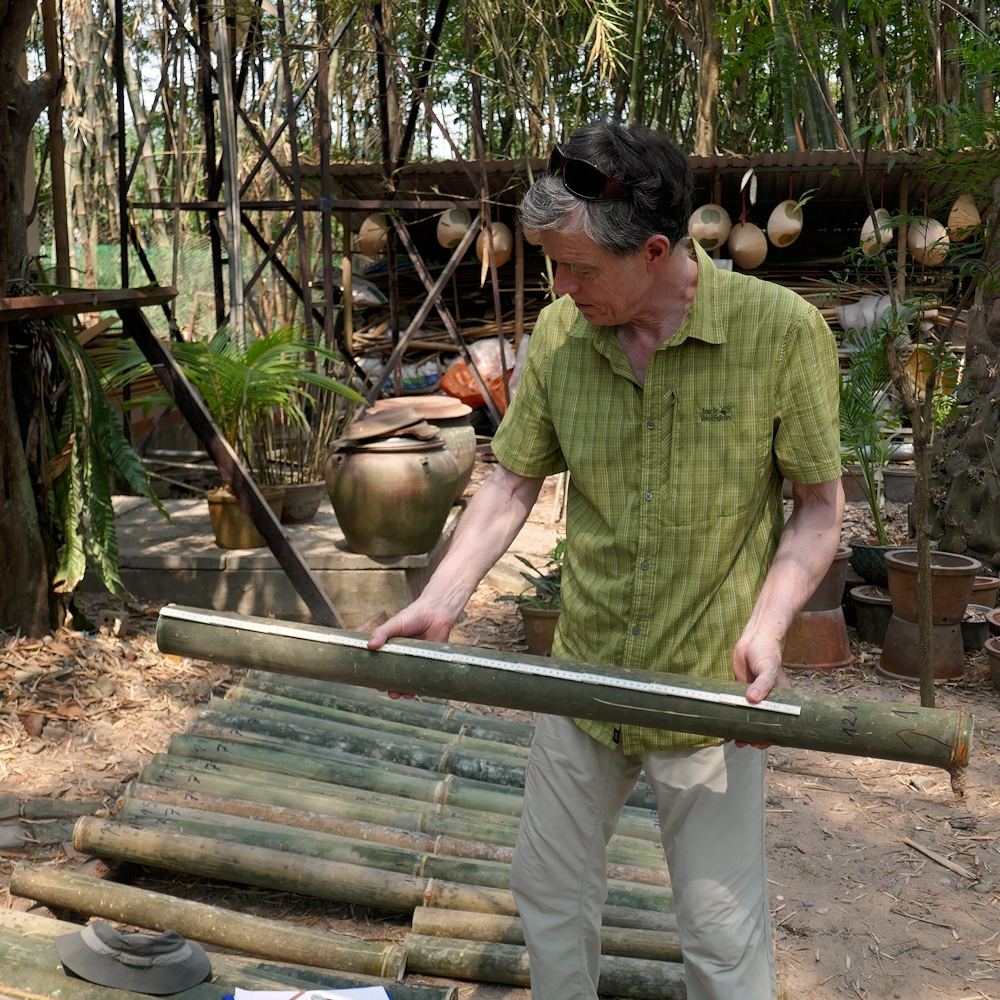
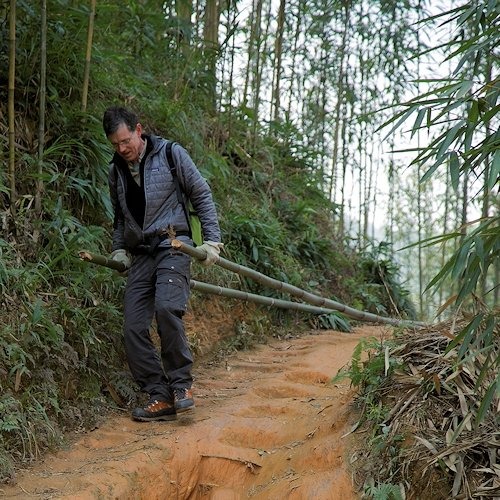
Instead of relying on history or feel, he approached bamboo like a scientific problem. He traveled through Vietnam and China, worked with botanists and universities, and ran controlled tests on hundreds of bamboo samples. He measured strength, flexibility, and durability the same way engineers test modern materials.
What he found led to a different bamboo species that is lighter, easier to work with, and especially interesting for modern and two-handed bamboo rods.
Peer Doering-Arjes is a biologist based in Berlin, and today we’re digging into bamboo fly rods, material science, and rod design.
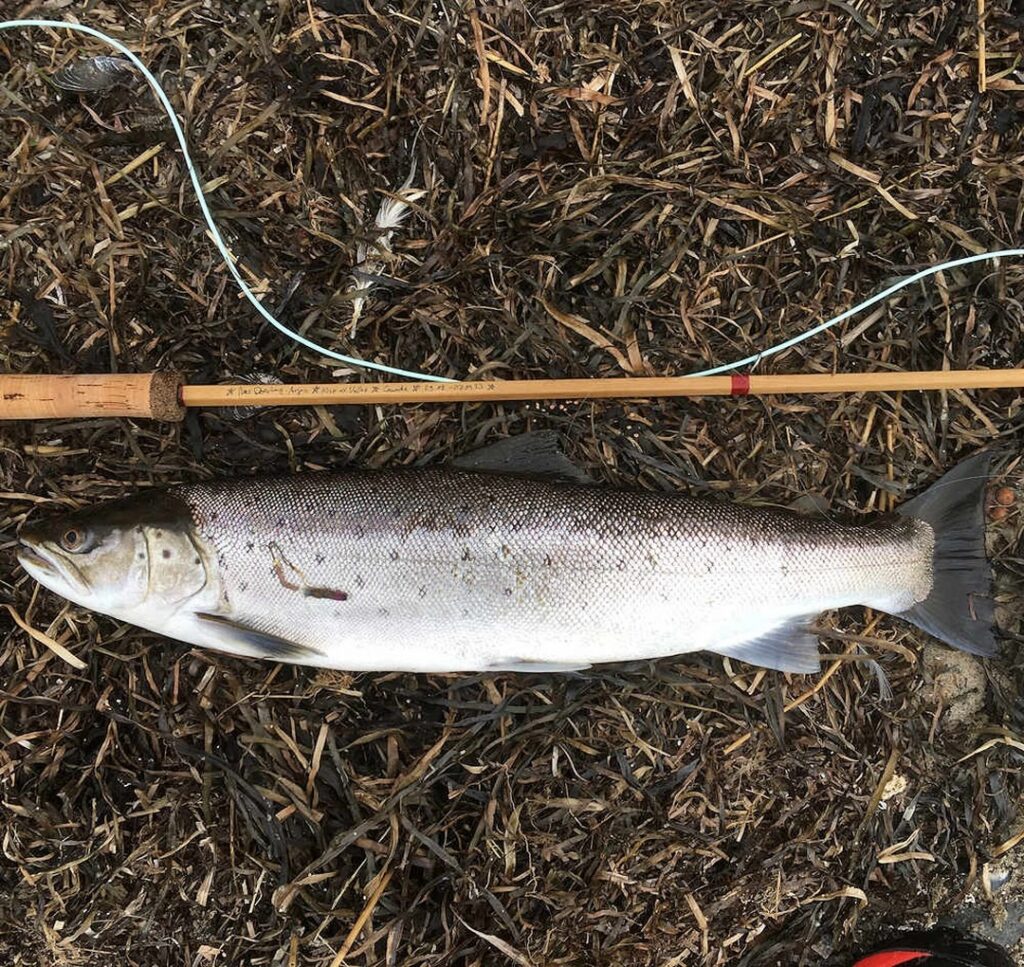
We talk about how Tonkin bamboo became the standard, what real mechanical testing shows, and why smooth timing beats power in both casting and materials. We also touch on sea trout, Atlantic salmon restoration, and why restraint matters on the water.
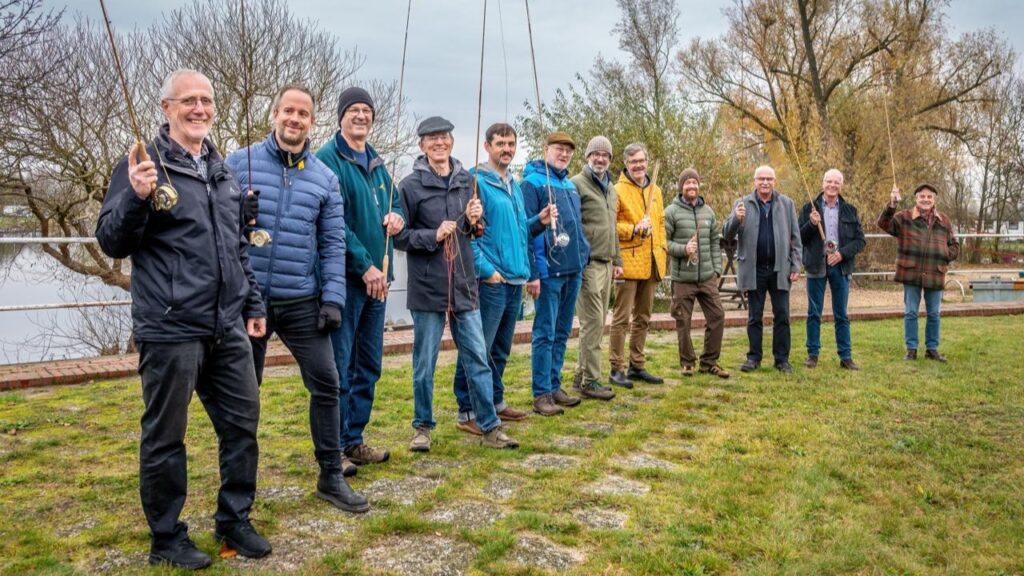
I asked Peer what fly fishing looks like where he lives, and he said it’s growing, but still a small niche. In the Berlin–Brandenburg region, he joined his local fly fishing club when he was member number 11. Today, that same club has grown to more than 160 members.
Even with that growth, fly fishing remains a small part of the overall angling scene in Germany. Peer estimates around 10% of anglers fly fish, and fewer than 1% fish with bamboo rods.
For more than 100 years, nearly all bamboo fly rods have been made from Tonkin bamboo from southern China. Before that, builders used Calcutta cane from India, but Tonkin eventually became the standard.
Peer explains that Tonkin was never really tested against other species. As a biologist, he wanted real data, not tradition. So he traveled through China and Vietnam, collected samples, and ran mechanical tests at the University of Hamburg, focusing on bending strength and flexibility.
I asked Peer if he was actually breaking full rods during testing. He said that would take too much time and too many finished rods. Instead, he made hundreds of small, standardized bamboo samples and tested those.
He found there is always a compromise. The temperature that gives the best flexibility is not the same one that gives the best breaking strength. You cannot maximize both at once.
We also talked about weight. His Vietnamese species is slightly lighter than Tonkin but very close in performance. In single-hand rods, that difference is small. In double-hand rods, especially 11 feet and longer, it matters a lot over a full day of casting.
Peer fishes with an 11-foot bamboo rod for sea trout from the beach. He says 11 feet is enough, especially with a two-handed rod. When you’re working with both hands, the extra length does not feel heavy. And if the rod is built hollow, it can be surprisingly light.
Peer compares it to a metal tube. The strength mainly depends on the outside. Making it solid does not increase stability, just like a tube can be as strong as a full cylinder.
Peer said both Tonkin and Lồ ô have advantages. But Lồ ô stands out in a few key ways.
The biggest difference is the internode length. Bamboo is segmented, and those segments are separated by nodes.
That longer spacing does not automatically make the rod lighter. Peer explains that weight mainly comes from the density of the bamboo itself.
Where the longer internodes really matter is in the building process. Tonkin takes a lot of time and effort to straighten at the nodes, especially when building multi-piece rods. With Lồ ô, you can cut the nodes off and get longer, straighter sections more easily.
He also found that Lồ ô splits much more easily. With Tonkin, you have to work harder to get strips that stay even from bottom to top. With Lồ ô, it cracks more cleanly and produces more evenly spaced strips with less effort.
Peer did not keep this research to himself. He started offering Lồ ô in 2023, and the response was fast. He says more than 140 rod makers around the world are already using it.
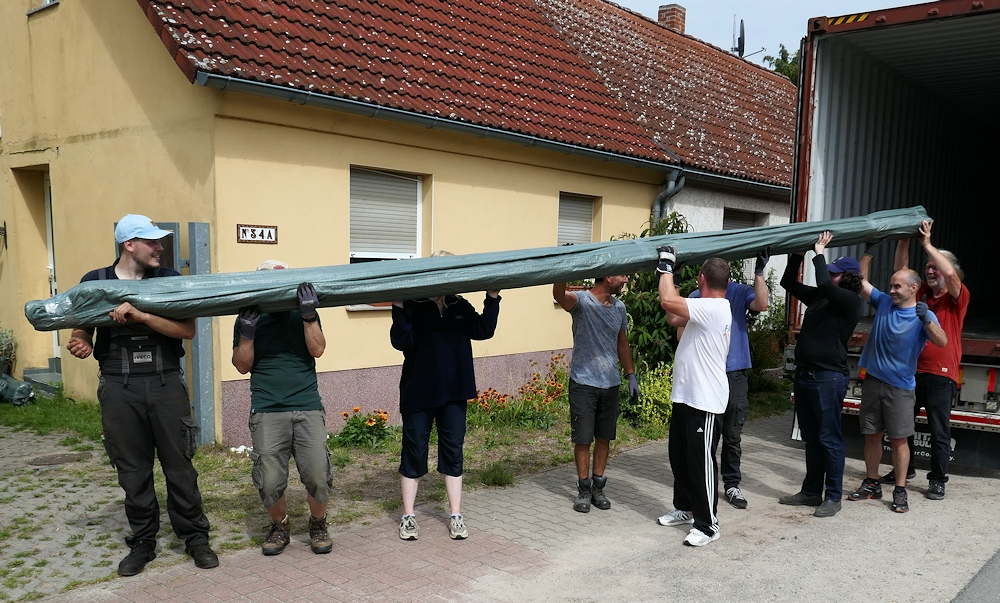
Getting Lồ ô to market was not simple. Unlike Tonkin, which has been cultivated for a long time, Lồ ô grows wild. There is no large-scale cultivation. That made sourcing and exporting more complicated. Peer had to:
Even today, shipping raw material can be tricky in some countries. But finished rods and bamboo are still available.
Peer believes a big part of it is the craftsmanship. People like owning something made by hand, not something that came off a factory line. Bamboo also allows true customization.
Peer likes short sections so he can pack rods into a rucksack. He has built four-piece single-hand rods with very short sections. Instead of using heavy metal ferrules, which add weight, he prefers splice joints. That means joining the sections with a splice and tape instead of metal fittings.
For him, bamboo is not just about tradition. It is about flexibility in design, durability, and the freedom to build exactly what the angler wants.
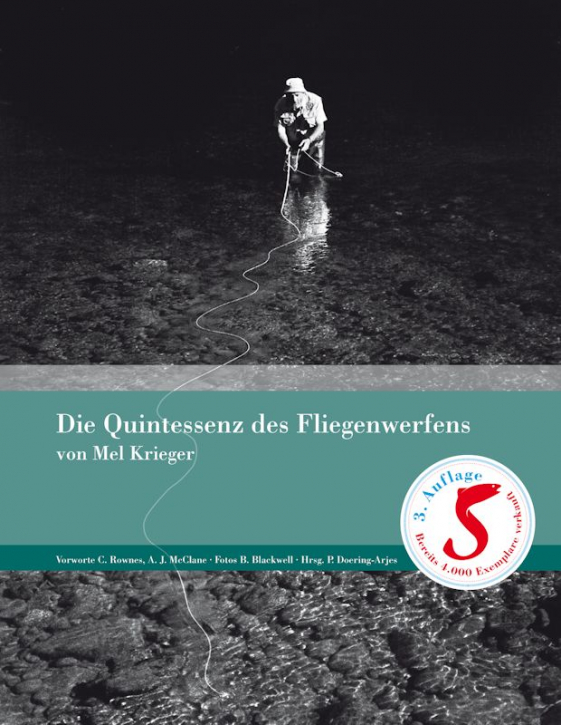
Peer says the book stands out because it focuses purely on casting technique and breaks it down in a simple, clear way. If you want to sharpen your fundamentals, you can find The Essence of Fly Casting on Peer’s website.
Peer has given lectures on casting and translated Mel Krieger’s work into German. While he does not call himself an expert, he has spent many years studying casting.
Most people use far too much power. Casting should feel effortless. It is about timing, not force. If you use too much power, you usually destroy the cast.
He says you must practice. Like riding a bike, it feels awkward at first. With repetition, it becomes natural.
If you want to learn more about Lồ ô bamboo, his rods, or his published research:
Episode Transcript
WFS 885 Transcript
00:00:00 Dave: For more than a century, fly rods have been built from the same bamboo, largely unquestioned, rarely tested, and passed down as tradition. Today’s guest decided to test it instead of relying on history or feel he approached bamboo as a scientific problem. He traveled through Vietnam and China, worked alongside botanists and universities, and ran controlled tests on hundreds of samples, measuring bending strength, flexibility and durability the same way engineers evaluate other materials. What he discovered opened the door to a new bamboo species that’s already changing how modern bamboo rods are built. Lighter, easier to work with, and especially relevant for two handed designs. This is the Wet Fly Swing podcast, where I show you the best places to travel to for fly fishing, how to find the best resources and tools to prepare for that big trip, and what you can do to give back to the fish species we all love. Today’s biologist pear is here today. He’s gonna talk about bamboo rods. We’re going to get into fly rods. Uh, Building bamboo rods, and he’s based out of Berlin. And this conversation, we’re going to go deep from the broad science and casting fundamentals to sea trout, Atlantic salmon restoration, and why restraint matters more than power. In today’s episode, you’re going to discover how Tonkin Bamboo became the default material for fly rods, what it looks like to test bamboo using real mechanical data. Why this new species offers advantages for lighter, modern rod designs, and how rod design influences casting efficiency and fatigue. Plus, we’re going to find out why smooth timing beats force in both casting and material choice. This is going to be a fun one. Let’s get into it. Here he is. Pair. You can find him at spring. How are you doing today?
00:01:45 Peer: I’m fine. And thank you for inviting me to this interesting place.
00:01:49 Dave: Yeah, yeah, thanks for doing this. I think what we might do today is dig into, um, you know, really bamboo rods and what, you know, you’ve got a species that you’re going to talk about that you’ve been studying a new bamboo species and I really know nothing about this. So this is exciting to share. I know, you know, a lot of the people we’ve had on the podcast, we’ve had Chris Sparkman, Bob Clay, a number of rod builders. So we’re going to try to bring things together, but maybe just start off first. Obviously I struggle sometimes pronouncing names. So tell us, what is your full name?
00:02:21 Peer: Full name? The full name is Pierre during Arias.
00:02:25 Dave: Yep. That’s so obviously why I didn’t say it. There’s no way I would have got that one. But. And where are you coming from today?
00:02:31 Peer: Well, today I’m in my flat at home in Berlin, Germany.
00:02:34 Dave: Nice. Good. This is in another exciting part. I always love being able to expand out a little bit. You know, we’ve done a number of episodes. I think we’ve been up in Norway and Denmark and even in Sweden was a good one too, because we’re learning more about some of these opportunities. I think people feel like with Atlantic salmon especially, that it’s this unique thing where you got to have a lot of money to fish, but it sounds like Sweden and I’m not sure maybe you could start off there. I mean, Germany, we haven’t done anything really in Germany. What is the. And the crazy thing is. Right, because German browns are probably one of the most prized species all around the world. Talk about that a little bit. What is fishing in Germany like right now?
00:03:09 Peer: Well, I think it’s not so much different from any other country. I mean, fly fishing is becoming more and more popular. I mean, I noticed that from our fly fishing club here in twenty years ago, I was a member number eleven, and now we have more than one hundred and sixty members.
00:03:27 Dave: Wow. That’s awesome.
00:03:29 Peer: That’s for the area. Berlin Brandenburg Brandberg is one of the lender, which Germany consists of several lenders, you know, and, um, quite a lot of members now, which.
00:03:41 Dave: Yeah. So it’s growing. So you’re seeing more fly anglers coming in and fishing in Germany and around the area.
00:03:47 Peer: Yes, yes, there are more people. The numbers are increasing. Although I fly, fishing is still a small niche. I mean, if you say, okay, all the anglers here, that’s one hundred percent, maybe ten percent are fly fishing and less than one percent is fishing with a bamboo rod. So that’s about the percentage, which I would guess.
00:04:09 Dave: Yeah. It’s small. Well, let’s talk about that with the bamboo because that’s your specialty. Describe what you’ve been doing with your new the species. Maybe go back a little bit to the history first. What are all the bamboo rods, these beautiful rods we see out there that are made by all the great companies now. And the older ones too. What sort of bamboo was it all made by coming from the same region in the world?
00:04:30 Peer: Yeah. Well, um, the one which is still used nowadays is Tonkin, which comes from southern China. But before Tonkin there was Calcutta cane from India, which was used first and then somebody. I’m still trying to find out who or why, but it’s I think it’s gone into uh, it’s not possible to trace it down, but at some point Tonkin was there and it’s used until today. So it’s more than one hundred and forty years. Four hundred and forty years used nowadays.
00:05:03 Dave: So today, all the new rods and probably the rods that, you know, maybe from the fifties or the last hundred years or more have been Tonkin from the southern China.
00:05:11 Peer: Yes, yes.
00:05:12 Dave: And now when what do you describe the research you’ve been doing? What has been the project this last ten years you’ve been working on?
00:05:18 Peer: Well, I was reading when I started making rods. It’s more than twenty years ago, and I started reading textbooks. And many of them say, okay, the best bamboo in the world is Tonkin for making rods. And it’s certainly very good bamboo species. But nowadays we have almost one thousand seven hundred bamboo species described in the world, and there was no record whatsoever if anybody has been comparing bamboo species. So as a biologist and Term scientists. I thought, okay, that’s I don’t believe that Tonkin is really the best. Maybe it is, but nobody searched for other species. So out of curiosity, I started looking into different bamboo species, and I traveled to Vietnam and China. I was also in China, in the area where Tonkin is harvested and grown. I was with with Andy Royer on his final trip. He was the main supplier of Tonkin in these days. And, um, altogether I was three times in Vietnam and was looking around for the other species, and I was lucky. I got in contact with a Vietnamese botanist who created a bamboo garden close to Ho Chi Minh City. She sampled all species of Vietnam, Cambodia and Laos and planted them in a in a garden And, um, I got in contact with her by, um, um, and, yes, a veteran in bamboo research. It was an old, uh, old professor, a German guy who is known as a one of the pioneers of bamboo research. And he had traveled all places in the world. Bamboo grows. And he put me in contact with many bamboo scientists. And so I also got in contact finally with, um. Yep, that’s her name. And she created this huge bamboo garden. And I could walk around in this garden and look at so many species. And then I took some samples home, and then I started testing. I did some scientific tests. I was a guest researcher at the University of Hamburg, where. Walter, this is an old professor, he was still in already in his nineties when I met him, and through him I could go into the or use the facilities as a guest researcher. And in the University of Hamburg, in the Institute of Wood Science. And I could make my first tests. I wanted to do something which is reproducible. Um, I didn’t want to go into the just saying this is better or worse comparative species. Just by my opinion. I wanted to have some hard facts. So I did some standard testing, which, um, the colleagues in the institute say they are doing this every day. So I brought my bamboo and carried out the tests there.
00:08:40 Dave: What was the test? What were you were you testing the structural like the strength, the flexibility or the just the actually genetics of it? Like, what was the test?
00:08:49 Peer: Yeah, not the genetics, but the mechanical properties. So the bending strength and the flexibility.
00:08:56 Dave: The bending strength. And I go back to you probably know, uh, you know, Tim Rajeff. Right. With Echo Fly rod, you’ve probably heard of his name. Yeah. So he’s got this funny video out there. We’ll try to get in the show notes where he he would take his rods and he would put him in this machine and he’d bend them until they break. And it’s a great video and echoes known because Tim’s such a huge you know, he’s kind of a scientist himself. I think he’s an engineer, actually. I think he has a background, but it’s really cool because his rods are really durable. You know, that was what he said with fly rods, you know, you can’t have everything. You can’t have the most durable, the fastest and the lightest rod. You kind of have to pick, you know. And I’m not sure if bamboo is the same way, but with graphite you have to pick like one or two. You know, you can’t have all three. Is that what you did too? Did you take these rods and actually, you know, break them?
00:09:40 Peer: Well, breaking the rods would have been too much effort to build many rods. I mean, you have to do a lot of breaks.
00:09:46 Dave: Build.
00:09:46 Peer: It. So.
00:09:46 Dave: I write, write.
00:09:47 Peer: Write plain small samples, a few hundred small samples and broke them. To get some, you have to do a lot of tests and change just one variable. I also heat treated them at different temperatures to find out what temperature is the best and the duration. And as you said, you can’t have an optimum of flexibility and breaking strengths. The optimal temperature for flexibility is much higher than for breaking strengths. So you have to compromise.
00:10:21 Dave: Gotcha. So it is a compromise. And then weight is another thing with bamboo rods right. I think everybody they’re just heavier. They’re heavier than a graphite rod or something or a glass rod. Right. Yeah. Or is that different. Does that depend on the species?
00:10:33 Peer: Um, it also depends on the species. Is this Vietnamese species, low, which I imported now is a bit lighter than Tongan, but very close in his properties. So especially for Spey rods, you can build the same rod lighter in low than in Tonkin.
00:10:55 Dave: Okay. And is that your focus? Are you focusing on a two handed rods? Is that over single handed rods. Are you kind of thinking about both?
00:11:03 Peer: No. No, both. I mean, um, I like fishing sea trout from the beach with, uh, with a double handed rod. It’s much, much easier because you’re casting so many times during the day. And, uh, I prefer the double handed rod, but other fish. I fish with single handed rods and. But the weight difference doesn’t matter so much in single handed rods. But if you have a double handed rod eleven foot or longer, it makes a big difference.
00:11:32 Dave: Yeah. What’s the rod you love if you’re using a bamboo for casting out on the beach? Like what length of rod bamboo rod would you love to use for those sea trout?
00:11:41 Peer: Yeah, I’m using a eleven foot.
00:11:44 Dave: Yeah, so you don’t need to go bigger. Is that the challenge that you go to twelve or thirteen? It gets too heavy.
00:11:50 Peer: No. Because you’re working with both hands. Um, it doesn’t matter that much, but eleven foot is enough. It’s. If you build it hollow. It’s so light. I mean, if you give it to a person which has no knowledge or hasn’t used a split cane rods, they’re always surprised if you give them a hollow build rod how light they are.
00:12:09 Dave: Okay, so there are two different types. Maybe describe that because I think a lot of listeners now don’t know the background. You know, you mentioned, I think off air, we were talking about Chris Sparkman, Bob Clay, two people we’ve had on the podcast that have we’ve talked about bamboo rods. They’re obviously experts as well. But what is that? Maybe describe that a little bit of the hollow versus are there different ways to do these bamboo rods now.
00:12:30 Peer: Yes. You can build them solid. So if you make a cross section it’s completely bamboo. But um, you know, let’s say you build a normal bamboo rod with six strips, and each strip is in the cross section. It’s a triangle. And if this triangle, if you put six together, you have a hexagonal rod. And if you take the strip before you glue them together and then, um, um, plane off the tip of the triangle, you can plane it down to one or two millimeters. And then inside you have a hollow area where there is no bamboo. It’s empty. So it means the the strength of the bamboo mainly depends on the outside. It’s like a metal tube. It the stability doesn’t increase if you make it full of metal. Just a tube is as strong as a full a full cylinder.
00:13:35 Dave: Okay. And are you doing that. Are you in your building rods too? Is that something you’re spending a lot of time doing?
00:13:40 Peer: Oh yes.
00:13:41 Dave: Yeah. yeah. You’re in fully into the whole every every aspect of it.
00:13:45 Peer: Oh, yes. Um, that’s also why I, I went out to search for another species and. Yeah.
00:13:53 Dave: So what did you find? What’s the take home? Break down the science. Because, you know, I think a lot of people might miss exactly all the details, but what did you find? Did you have a scientific conclusion that you’ve come out of this research? Um.
00:14:07 Peer: Well, let’s say the science is a basis to have some reliable results. So the conclusion is going back to the the properties of the bamboo. I mean, both species, Tonkin and lo, they both have their advantages. But the advantages of the new one is, as I already said, uh, lo is lighter than Tonkin. But the big difference is that the the internodes are much longer. You know, bamboo culm is segmented and you have nodes, and the distance between the nodes is very different.
00:14:46 Dave: Is more so in the in the the new one that you found, the distance between the nodes is much wider than the Tonkin.
00:14:52 Peer: Much wider, and Tonkin. The maximum distance in Tonkin is about twenty inch and in low it can be up to forty seven inches.
00:15:02 Dave: Forty seven inch. And what that does and the nose is that where the other plant, the stems are growing off? Is that what a node is?
00:15:08 Peer: No, I mean the the stem is segmented. It’s not.
00:15:11 Dave: Oh okay.
00:15:12 Peer: If you go high up the branches are coming out. But the main part of the stem is just one big cylinder which is tapering down.
00:15:21 Dave: Okay. And what is a node. What is an actual node.
00:15:24 Peer: Um, the node is um, you can imagine the calm is a long pipe. The bamboo calm is a long tube which tapers down to the tip. It becomes smaller and smaller the diameter. And along this tube you have segments and they are separated by nodes. So that’s inside the car. I like like the hollow rod. The calm inside is hollow. And in the node area there is an area where it’s not hollow. The hole.
00:15:58 Dave: That’s right, that’s right. Okay. Yeah. The nodes and you see them on the outside because you’ll see a little almost a ring. Right. Or something like that around. Yeah okay. That’s the node okay. So more spacing makes it a lighter rod. Right. The less nodes you have the lighter.
00:16:10 Peer: No, not the nodes. Um, it’s it’s the, um, the density of the bamboo itself. The main thing about the internodal distance is you have much less work if you build a multi-piece rod, let’s say three or four piece. It’s a lot of work to straighten the nodes, and Tonkin takes a lot of time and effort. If you want to have a flat surface and in low, you just cut the nodes off and you have a long piece which is very straight. And it’s also splitting much easier. Splitting in Tonkin, you have to exercise quite a bit to get strips which have the same diameter in the bottom and in the top, and with low it’s very easy to just to crack it and you get very evenly spaced strips.
00:17:00 Speaker 3: Fly fish with me Utah discover year round blue ribbon trout fishing on the famed Provo River. Choose a guided walk and wade or a scenic float and experience big trout, stunning canyons and unforgettable days on the water. You can book your adventure right now at Fly Fish with me Utah.com. World class water. Incredible fishing that’s fly fish with me Utah. Com check out Jackson Hole Fly Company today. Premium fly gear straight to your door without the premium price.
00:17:31 Dave: Jackson Hole Fly Company designs and builds their own fly rods, reels, flies and gear, delivering quality you can trust at prices that let you fish more and spend less. Whether you’re picking up a fly rod for the first time or guiding every day. They’ve got what you need. Check them out right now. That’s Jackson Hole fly Company.com Jackson Hole Company.com from the work you’ve done, what impact do you think this will have on fly fishing rods and and what do you think the future like what are you going to use this information for or is it just for you, or do you think the broader industry can use this to actually maybe start changing, adding this to the rods?
00:18:13 Peer: I mean, I started offering this bamboo species in twenty three, and now there are already more than one hundred and forty rod makers around the world who are using it.
00:18:26 Dave: So this is already going. So you’ve already got this. The ball is rolling. You’ve got people using this around the world.
00:18:32 Peer: Yes, I get orders from Australia, from Japan. From the states, from the states, from Europe. I mean, I’ve been publishing the results in power fibers. You know this online magazine from Todd Talsma.
00:18:46 Dave: What’s it.
00:18:46 Peer: Called? Power fibers.
00:18:48 Dave: Okay. Power fibers.
00:18:49 Peer: Power fibers. It was one of the very few magazines which are available. Just. They concentrate just on bamboo rod making. First there was a planning form which is not in existence anymore. This was something still on paper. Then came the planning form, which was from the beginning was already online. And then from Italy came, um, the Bamboo Journal. And so the Bamboo Journal is the only one left because, um, last year the editor of Power Fibers talsma from the States. Unfortunately, he passed away.
00:19:27 Dave: So that one’s not out there. So the power fibers is not going either.
00:19:31 Peer: No. Power fibers is gone.
00:19:33 Dave: Oh, it’s gone.
00:19:34 Peer: It’s gone. Yeah. Um, but in the last volumes. Volume sixty five, I published some of my results about this new species.
00:19:43 Dave: Okay. How could we find that? Can you still find that in power fibers that your the work you published?
00:19:49 Peer: I mean, you can find it on my website. And I think the last because it’s the last edition which was made I think it’s still online. If you look at power fibers.
00:20:01 Dave: Yeah it is I see it now. Yeah. It is online. So they still have you can still see it. I’m looking at your article now on there. Okay. So it’s still there for now. And I see some of your rods. They’re beautiful too. Yeah. You’ve got they. Yeah. Again I don’t know the whole history but of the bamboo. But these are some pretty amazing rods I’m looking at here. So that’s basically what is your what do you think the future holds for what you have going. Do you think I’m I’m going back to you’ve got this industry that’s built around these Tonkin bamboo. Do you feel like there’s a potential to have more of the new species that you found around the world. And is there a limit to how many rods we can get? Is there a as far as the numbers that we can use this, you know, out there?
00:20:41 Peer: I mean, the difference between, um, availability of Tonkin and oh, is that Tonkin has been cultured for a very, very long time and the oh is growing wild. So it’s more difficult to harvest. And there is no cultivation. So it’s, um, the number is not it was very difficult to get hold of it, to find somebody who would sell it to me and many other obstacles. Finally, I got in contact with the farmers through the through the botanist who made the bamboo garden. But this was still not enough, because in Vietnam you need a license for export, which the farmer didn’t have. So I had to find somebody who was allowed to export. So, um, it was not easy to get it.
00:21:33 Dave: Oh, right. Right. See that? Have you got that process down a little bit now of getting it and exporting it. And you got the whole challenge. Now as we’re sitting here, I’ve been talking to a lot of people around the world. We’ve got the US has changed and we’ve got these tariff things that are making things a little bit crazy for people. And, and it’s kind of this crazy world we’re in. But do you find is that a challenge for you or are you able to send stuff or let’s just take it to the to you as a like, if somebody wanted to get one of your rods, do you actually could somebody purchase that or call you up and check in with you?
00:22:03 Peer: Yes. That’s no problem. I mean, there’s a little problem when I send out the raw material for other rod makers. Um, for example, DHL doesn’t accept any, um, any commercial packages anymore with a value above, I think one hundred dollars. So I have to send it as a gift.
00:22:26 Dave: Oh, right.
00:22:27 Peer: Yeah. But with other countries, there’s no problem.
00:22:30 Dave: Yeah, it’s just the US now. It’s just the US. Yeah. That’s. Yeah, I know I’ve heard a lot about it because we’ve got a lot of listeners all around the world, you know, and it’s. And so it’s been kind of crazy. But the point is, is that somebody could reach out to you, and the best place would be to just, um, go to your website, probably start there if they wanted to get some information.
00:22:48 Peer: Yes. You can find all the information about this bamboo species on my website, uh, different length classes I offer and surprises, etc. and also information about the bamboo itself. I mean, there are the two. Actually, I published two papers on power fibers, and you can find them both at the bottom of the bamboo page if you’re interested in the details.
00:23:15 Dave: Okay. Anything else you want to make sure we understand about your research, what you did. Um, it sounds like it’s pretty. You’ve created something that, um, is lighter. What about on the strength? Is this new species stronger than the the Tonkin bamboo, or what are the main features of a bamboo rod you’re thinking of? Is it just like a graphite rod? You’ve got strength, you’ve got lightness, you’ve got, uh, what are the big ones?
00:23:40 Peer: I mean, the strength of low is slightly lower than than Tonkin. But if you want to make a same rod from Tonkin at low, you have to increase the diameter by three to five percent, which is not visible by eye. Um, and then you have the same properties as Tonkin. So it’s very close to Tonkin. And if I also looked at other species, you have, um, I mean, in Japan, for example, they’re using madake bamboo and other bamboo species, which are quite a bit lower in bending strength and breaking strength. But, um, you can still make good rods out of these bamboo species. And I think within these One thousand seven hundred species which are available. There are many more which are suitable for road making because when you are casting, you won’t apply so much power until it breaks. You have to do something wrong and you jam it between your car door or something.
00:24:44 Dave: Yeah that’s right. Yeah. You got. I’ve heard that before. Like bamboo, you can literally run it over with your car. It’s probably the strongest rod out there, right? It’s pretty durable.
00:24:52 Peer: Yes, yes, if you don’t, if you build a solid bamboo rod, you can step on it and nothing happens. I mean, of course the guides will be bent, but. Right. The rod will survive.
00:25:04 Dave: Yeah. It’ll survive. What do you think? Is that in this? And I know bamboo has been getting a you know, it’s been a resurgence of bamboo out there. We’ve been hearing and I think it’s because it’s this beautiful thing. Right. You got all the history I feel like I would love. You know, I’ve got some old bamboo rods out there. What do you think is the biggest advantage or why do people buy bamboo if they haven’t done it before, why would they want to think about getting one?
00:25:26 Peer: Well, I think people appreciate more the handwork. They don’t want to have something which is made by the industry. And and, um, I like bamboo because you can make any rod out of it. I mean, if a customer comes and says, no, I don’t want this model in seven foot, I want to have it in an eight foot. It’s a piece of cake to change it and make it. I mean, with the rods, with the carbon rods, you are bound to to the models which are on the market and you can’t, um, as a rod maker, you could make it a different one. You can. Yeah.
00:26:04 Dave: Yeah. So it’s customized. You can make anything you can. Somebody could call you up today and they could say, hey, I want a seven foot, three inch whatever. You can make that rod. Yes.
00:26:13 Peer: And you can make it in as many pieces as you want. I mean, I like very short pieces so I can put them into my rucksack.
00:26:21 Dave: Okay. How many pieces? What’s a good piece? Like a six piece rod or what? How many?
00:26:26 Peer: Well, I haven’t made a six piece, but I have made a single handed four piece rods. So you have very short pieces, and. And I don’t like the metal joints usually. Um, you have a metal ferrule to connect the pieces, but for a four piece rod you would have three pairs of ferrules, which makes the rod far too heavy. So you, you use an old. What I like are splice joints.
00:26:55 Dave: Oh splice where you actually put and then use tape.
00:26:58 Peer: Right, right.
00:26:59 Dave: Yeah. Yeah we have and I want to give a shout out I was going to do this a little bit later. But Ed who’s in our group, he’s going to love this conversation because he is a bamboo rod maker. And he’s got this really cool story. I fished with him up on the south shore of Lake Erie with the guy and one of our steelhead schools, but he, um, he had this goal on the trip that he wanted to catch all traditional. He built the bamboo rod. He had a silk line, he had a horsehair leader, and he had a traditional wet fly. And I was there to see him to catch a steelhead. It took him a little more work, but he did it. And I feel like this is I remember him talking about this because he had the rod spliced together, and I think that’s because he was a spey rod, right? Same idea. You can’t have the metal. It’s just too much weight. Yes. Yeah. Okay. So what would you be? What would be your editor if you were talking to editor and he was listing because I know he’s going to love this. Would you be telling him he needs to check out this new bamboo? This would be a helpful thing for his spey rod.
00:27:50 Peer: Yeah, it would be quite a bit lighter than if you make it from Tonkin. It’s, uh. And you will notice it. It will make your casting a bit lighter, easier. But I think that all this talking about the weight, comparing a bamboo rod and a carbon rod. Um, usually you fish with one rod, right? You can’t handle more than one rod at a time.
00:28:16 Dave: And although we have a lot at our at the house. Right. You want to have a bunch of rods.
00:28:20 Peer: Yes. But on the water you are. If you’re casting five rod, which weighs five one ounce more, uh, it doesn’t, doesn’t matter. Doesn’t matter.
00:28:32 Dave: But does it matter with the two handed rod? What if you wanted to build a a fourteen foot spey rod? Right. That matters, doesn’t it? On that. Getting that right as far as weight.
00:28:42 Peer: Yes. I mean, the longer you get and if you get in the real long, long rods, you will feel the difference more because of the lever and everything.
00:28:52 Dave: Yeah, but it’s just part of it. What is your talk about your fishing a little bit? I want to hear about this because I think that you are. I’m assuming you’re fishing just heading up north in Germany and you’re fishing some of those same waters for sea trout. Are you also getting Atlantic salmon turning into those? Some of those German? Uh, is that where you maybe describe the town? Are you in Hamburg or what’s your closest town where you live?
00:29:14 Peer: Well, Hamburg, you can reach within in two hours from Berlin. Yeah.
00:29:19 Dave: Oh, yeah. You’re in Berlin. That’s right. You’re in Berlin and Hamburg. So Hamburg is about two hours.
00:29:23 Peer: But, um, actually, um, our fly fishing club has a, um, got involved in reestablishing sea trout and salmon in the area here. So if you drive, um, an hour from my home, you you can visit our brewhouse, where we started many years ago to, together with a fisheries institute to re-establish, um, salmon in our area. And yeah, we have salmon and sea trout returning.
00:29:57 Dave: So, so salmon used to historically would return to streams through Berlin in that area.
00:30:03 Peer: Also also through Berlin. We are working on a small river which flows into the Elbe, which flows out of Hamburg into the North Sea. But, um, yeah, historically there were Many rivers. You had sea trout and salmon, but they were completely eradicated. Germany had no salmon. Fifty years ago it was completely. All the stocks were gone. And we had to start with salmon fries, which we which we got from Denmark. I mean, not like Sweden where salmon were never extinguished there.
00:30:46 Dave: Right. So in Germany, because of impacts from human whatever, everything, they were extirpated, extinct from that area. But now you’re bringing them back to. And what does that look like now? Do you have can you go to these streams you’re talking about and actually see returning Atlantic salmon there and fish for them?
00:31:02 Peer: Yes, you can if you like. You can come in the autumn and we when we fish once a week for the salmon and sea trout returning to, to strip off the eggs and to breed to breed them because, um, breeding brings them, um, you get a much higher um, the success rate is much higher than letting.
00:31:29 Dave: Yeah, yeah. Because you probably have a out of those fish that go out if you release, um, you know, a thousand fish that go out to the ocean, probably one percent, if you’re lucky, you’re going to come back as adults, right?
00:31:40 Peer: Yes.
00:31:41 Dave: Plus Atlantic salmon for a lot of reasons. Climate change. You know, it’s not easy. Right. We’re hearing stories of some of these places around, including Scotland, you know, and things like that where the numbers are going down. Right. We’re still having struggles out there. And it’s so, so I feel like. But there are some good success stories. I think what you’re talking about here, I’ve heard some of these success stories where you can go and see these hatchery fish that have become reintroduced, but now they’re actually self-sustaining. Is that is that kind of the goal, do you think, for Germany that you’re able to.
00:32:09 Peer: That would be the the final goal. But so far I don’t know any. There are quite a few breeding stations all over Germany nowadays, but we have no self-sustaining stock yet and nobody knows if we will ever reach that.
00:32:25 Dave: Right, right. It’s a good goal. It’s a good goal to have. I mean, again, it’s lots of challenges out here, but this is good to hear. I love because we really haven’t talked about Germany again. And what about the so you got Seatrout are you do you also have resident brown trout fishing opportunities just for fish that actually are or were those all kind of extinct as well?
00:32:44 Peer: No. Brown trout was not extinct.
00:32:47 Dave: Okay.
00:32:48 Peer: No. Um, actually, it’s also just one hour. If you drive one hour in the direction of of Hamburg, you have a nice trout stream which our club takes care of. And this very nice brown trout. I mean, you never know if if it I mean, the chemical pollution was heavy all over Germany and the obstructions in the river where the fish couldn’t migrate anymore. So you can’t be sure if this was not if it’s not nowadays originates from Stockfish or if they’re really wild.
00:33:22 Dave: Right? Right, right. Gotcha. Okay. But but there are. That’s cool. Cool to hear. And yeah, we’ve talked a little about this just from our I know doing our competitive, you know, series. You know because there’s a lot of uh, Euro nymphing right is a very popular technique. Are you getting into that. What’s your rods that you’re building? Do you build everything from big rods? Are you building euro nymphing rods? Do you kind of cover everything?
00:33:45 Peer: Well, I’m I’m myself. I’m not very much into euro nymphing or I’ve done it with a friend, but I didn’t like it very much because you’re just using a nylon, a no fly line. It’s not. Um.
00:33:58 Dave: Yeah. There’s no fly line. Right? You’re not casting.
00:34:00 Peer: I mean, I went into the details of casting very much. I, I translated the book of Mel Krieger, the essence of fly casting into the.
00:34:11 Dave: Oh, yeah.
00:34:11 Peer: German version.
00:34:13 Dave: Yeah. tell me about that. Let’s hear about Mel, because Mel Krieger is probably, maybe the most famous casting one of them for sure. Right? In history, at least for the US. How do you connect with Mel Krieger? Because he’s a he’s been passed away a while. How do you make that first connection?
00:34:28 Peer: Yes. Um, yeah, quite a few years ago, my my friend Chris Rounds, he is now also quite well known caster here in Europe. He met Mel Krieger, and Mel asked him, could you translate my book into German? Because there were already versions in Japanese, in Spanish, many languages. And Chris said, yes, I do that. And Chris lived many years in Berlin, and he told me that stories. And I said, okay, if you need some help. And and so we translated it together finally. And I added it in in as a book book of demand because the publishers here in Germany, they were not interested in something black and white. They wanted to have color and they didn’t believe me. I said, for this book, it’s good to have it black and white. You can see very well how what you should do while you’re casting and what you shouldn’t. So finally, I published it myself and it was quite successful. Until today, there are almost four thousand copies sold.
00:35:47 Dave: No kidding.
00:35:48 Peer: Yeah.
00:35:48 Dave: What was the. And what’s the name of the book?
00:35:50 Peer: Um, well, the English title is The Essence of Fly Casting. And you also find it on my website. This is German edition. I mean, that’s the one book which Mel Krieger wrote. He was working on a second one, but unfortunately, then he passed away.
00:36:08 Dave: Oh, he was he was working on a second one.
00:36:10 Peer: But, um, when he was still there, we did some tours here in Germany and Switzerland giving workshops together. So I was a translator and he was an instructor.
00:36:21 Dave: Yeah.
00:36:22 Peer: That was fun. Yeah.
00:36:24 Dave: That’s awesome. The casting is such a and I agree with you. You know, the Euro nymphing is a challenge because, well, you’re not casting a line, right? So it’s different. And I feel like fly fishing. The casting is, is just as much a fly fishing as anything. Or it’s probably maybe the most important thing if you’re not casting, are you really fly fishing? Right. But that’s that’s the thing. A lot of people have struggles, right? That’s the first thing you have to learn. The big thing about when you get into it. And books like do you think the Essence of Life and I’m seeing it now, the essence of fly casting on Amazon for thirty five dollars right now, you could go pick one up. Do you think that’s a good book for somebody who is maybe new to it, or maybe struggling with their cast to read that? Do you think that would help a lot?
00:37:01 Peer: I think it’s still one of the best books, because it’s just about the technique of of casting. I mean, there are hundreds of fly fishing books, And there’s one chapter about casting and. But you don’t learn anything. And I think together with his videos, um, hardly anybody has a video player nowadays.
00:37:23 Dave: Yeah.
00:37:24 Peer: For for DVDs. But I was also selling his films on, on, um, if you have both together, the films and the book, you could almost learn it yourself. He was such a good instructor and really bringing it down to the essence and explaining it in a way that anybody could understand it, and just pointing out the important points. I learned a lot while I translated the book, and I think it’s also a good basis. It was a good basis for me. If you’re making rods, if you know the the basics of casting.
00:38:02 Dave: Yeah. Okay, so we got a good resource there on the book if people want to take that further. Do you think buying a bamboo rod can help your casting at all? If somebody’s struggling, maybe with wind casting in the wind, do you think is a bamboo rod more forgiving than a than a graphite rod in any way? Would it be a benefit there?
00:38:18 Peer: Um, I would say simply, yes, but but if you can, um, because graphite rods are so fast nowadays and they’re I mean, over the years, every company wanted to build a fast and a faster rod, and it’s more forgiving if it’s not that fast. That means if it’s not so stiff, faster rod is stiffer than a, um, the other rods which are softer. But there’s also a misconception. The traditional bamboo rods, everybody who hasn’t been using a split cane rod thinks, okay, they are heavy and wobbly, and if I have a customer here in and coming to my home, I give him several bamboo rods, a traditional one, and and also very fast. You can make a extremely fast bamboo rod.
00:39:16 Dave: Oh you can.
00:39:17 Peer: Yeah. My my friend Ulf Lovdahl is Swedish rod maker. He’s very well known in Sweden. He likes only fast bamboo rods. So. And finally I give my customer who wants to explore the varieties of bamboo rods. Give him in the end, this bamboo rod from my friend. And then every. He’s always astonished. That’s bamboo rod so fast. It’s incredible.
00:39:44 Speaker 4: It’s fast. Yeah.
00:39:45 Dave: So you can’t make them fast.
00:39:46 Peer: It just depends on the taper how quick or how slow it diminishes in dimension.
00:39:52 Dave: Okay. And then when you make that rule, if you make a really fast bamboo rod, is it now become less durable or easier to break.
00:40:01 Peer: No. Bamboo is. So I mean I mean, there are persons who can break anything.
00:40:07 Speaker 4: But. Yeah. Right. Right.
00:40:08 Dave: But just comparing it to I always go back to the graphite because it’s hard to compare this. But graphite you know.
00:40:13 Speaker 4: You can is you.
00:40:14 Peer: Can break a graphite rod more easily than a bamboo rod.
00:40:17 Dave: In general you can right. In general. Yeah.
00:40:20 Speaker 4: Yeah.
00:40:21 Dave: What about glass? Have you messed with. Have you used glass before? Have you built rods with graphite or have they always been.
00:40:28 Speaker 4: Um, yeah.
00:40:28 Dave: I guess that’s a different thing. Right. But you’ve compared them, it sounds like.
00:40:32 Peer: I mean, when I started fly fishing, when. When I studied fish ecology in England, I started fly fishing in seventy eight, seventy nine, and then only glass rods were available. Um, it was still some years away from carbon, but I I’m not collecting rods. So I was fishing for, for many years just with this one glass rod class.
00:40:58 Dave: So you had glass. What was that? So go back to there a little bit. Fish Ecology England, was that your background or how did you. I can’t remember if we got that whole story, but how did you get into where did fish ecology come and then when did the fly fishing all come together? Bamboo?
00:41:12 Peer: Everything you mean? I studied biology and I was always interested in fish. I was hooked when my grandfather took me fishing when I was a little boy. And I only could do it when we were visiting him up in the north of Germany. He lived in the city Kiel. And I didn’t do any angling then in Berlin. So I was very, always very curious, looking forward to the holidays and go fishing with my grandfather. And later on I started biology studying in Germany, and then I, I went to England to study fish ecology, and in the same year I started fly fishing, buying a I think it was a fiber tube rod, the same company who made the blanks for Hardy Brothers.
00:42:01 Dave: So that’s when you got your fiberglass. What were you studying? Uh, the fish ecology. What was that? Did you go into, like, uh, was that your degree or what were you studying?
00:42:11 Peer: I mean, what I studied, there was a diet of, uh, two different fish species, small fish species in a river. But I the degree I took later on here in Berlin, I studied the fish populations in a lake of Berlin, did some population estimates, and then I specialized in fish aging, which I have done quite a bit later on.
00:42:33 Dave: Okay. And how do you fish aging is the using the otoliths to age. Is that is that what you’re doing? Yeah.
00:42:40 Peer: Um, otoliths are the best parts because otoliths are still growing, even if the body doesn’t grow. Otoliths are always growing.
00:42:49 Dave: And the oldest are kind of like it’s the inner ear and it’s like a tree ring. Right? The same sort of idea where you can count the number of rings and that’s how old the fish. And then you can also see whether it was in the saltwater or freshwater and, and changes. Right. And so you were studying all that with different species in the lake?
00:43:04 Peer: Yes. But it’s not so easy. You can see many different rings, but not every ring represents a year. So like a old long play records, LP records, you could you have many rings, but you differentiate. The songs on the disc is quite easy, but not on the fish. Okay, so it’s, um, you have to validate it by known age fish. So you have to stock some fish which are marked. And then if you recapture some fish, you know, how old, how many years he lived since you marked them. It’s quite tricky.
00:43:39 Dave: Today’s episode is brought to you by Trout Routes by Onex, the ultimate mapping app for trout anglers. Whether you’re planning a big road trip or sneaking away for an afternoon session, Trout Routes helps you find and explore new waters fast. You’ll get detailed maps that include public land boundaries, stream access points, regulations, and other extras like hiking trails and parking spots. I’ve been using it to plan my trips, and it’s taken the guesswork out of the process. No more bouncing between multiple tools. Everything you need in one spot. Give it a try right now at. Routes and download the app to start exploring smarter today. And what were the species you were studying in the lake?
00:44:22 Peer: Um, it was um, I worked mainly with eel also the years after that. The European eel, which.
00:44:30 Dave: Oh, the European eel.
00:44:31 Peer: Yeah. Which migrates to the Sargasso Sea.
00:44:35 Dave: Oh, right. It does the opposite. Right. The eel. Is it born in the ocean and migrates. It’s the opposite of salmon.
00:44:40 Peer: Right, right, right.
00:44:42 Dave: Cool. So eel. So. And we have the American eel, I think, here. But you have. Yeah. So the the European eel.
00:44:48 Peer: Yeah. They both meet in the Sargasso Sea, so.
00:44:51 Dave: Oh they do.
00:44:52 Peer: Um, I think because of the continental drift in ancient times, they were close together, but because of the continental drift, the European eel had the, um, I don’t really know the German word for it. So he was unlucky. So he had to migrate thousands of kilometers to reach the mainland.
00:45:15 Dave: Okay.
00:45:15 Peer: And there’s still some mystery about the eel so far until today. Never, ever. An eel has been seen or caught in the Sargasso Sea.
00:45:27 Dave: Oh, wow.
00:45:27 Peer: Yeah.
00:45:28 Dave: So the eel. And what is the life history of eel? Do they. So they’re in the. The sea. The Sargasso Sea. And then they migrate back to freshwater to grow. Or is that how or why are they going back to the lake? Because they’re in this lake that you’re studying, right?
00:45:42 Peer: Yeah. Well, you could say they they’re migrating in general, migrating back to freshwater.
00:45:48 Dave: Um, like, what’s the advantage of the freshwater? Why would they want to get to the freshwater? Because that’s where all the that’s where some of the problems are at, right? They got to go through these dams and pollution and all this stuff.
00:45:59 Peer: Yes. But, um, my Swedish colleague, he was a Swedish EAL expert. He did some very detailed studies of the otoliths, and he could, um, analyze the trace elements in otoliths. And he found that quite a big part of the eel population stays in brackish water. And it seems to be when when the eel population was still huge. I mean, one hundred years ago, a certain time of the year, you could see white bands migrating up the rivers and millions of glass were migrating up the rivers, which is not the case anymore. So nowadays there are only a few percent of year compared to the eel stock one hundred years ago.
00:46:46 Dave: Yeah, I think of the salmon. I always go back to the salmon life history because Atlantic salmon, all these species, they, you know, they’re born in freshwater and they go to the ocean because that’s how they can grow. You know, there’s It’s the only way they can grow big fast, right? Is that so? That’s the advantage there. But there’s some like steelhead, you know, rainbow trout are the same species as steelhead. Some of those steelhead are born. But because changes in the environment they might not go to the ocean. They might just stay in the freshwater because it’s safer. I wonder eel I’m going back to that. So they’re born in the ocean, right? And then so they’re out there and then they want to go in for some reason, I guess maybe it’s for growth. Maybe it’s the same thing. Maybe they’re going into grow because there’s food in these areas or something like that. Right. It’s got to be some sort of life history thing there.
00:47:26 Peer: It’s um, I think there’s no good answer to that. I mean.
00:47:30 Dave: Yeah, they don’t.
00:47:31 Peer: Know. There’s a lot of food in the ocean and there’s a lot of food. It’s a question of the how the evolution went.
00:47:40 Dave: They’ve just done it.
00:47:41 Peer: They’ve just done it. And, um. Yeah. Um, all the freshwater eel, also the one in in New Zealand and Japan, they’re doing it the same way.
00:47:52 Dave: Yeah. Interesting. So you studied those fish in college. And then eventually did you keep studying or did you get into the bamboo, all the bamboo stuff in your in your life?
00:48:02 Peer: Um, I mean, I went into the bamboo stuff in detail. Yeah. When, when I had retired and then I, I went into the bamboo in detail. I started searching literature. Um, I mean, for example, Tonkin. I nobody knows why is this bamboo species called Tonkin? It’s, um.
00:48:27 Dave: Yeah. Why is it called Tonkin? What is Tonkin?
00:48:29 Peer: It’s, um, the original name in China is charcoal. That means it’s not pronounced correctly, but it means bamboo.
00:48:38 Dave: Okay. TI stick.
00:48:39 Peer: TI stick bamboo. And it was, um, first mentioned as being procured from Tonkin by, uh, in a paper or in a gazette, a fishing gazette in nineteen oh two. That’s the first time this name comes up. And it was later adopted by the Montague City Road Company, which used it since eighteen ninety eight. But the name Tonkin in Vietnam, Hanoi was um in the fifteenth century, Hanoi was called Tonkin, and that was by the Europeans turned to Tonkin and later the French colonists called the north part of Vietnam Tonkin. The Vietnamese never used this name. And I mean looking from the States or here from Europe. Uh, this Tonkin is not that far away from China. But if you are in Vietnam, it’s quite a bit it’s the same. It’s not the same area. But, um, the interesting thing is that Tonkin, if you read about Tonkin, they say Tonkin occurs only in the southern China. But Vietnamese scientists, they also took me to a place where Tonkin grows in northern Vietnam. And interesting enough, when I was in London, um, in Kew Garden, the botanical garden in London, they have an economic botany collection and they have, um, some pieces of, um, from a hardy rod Hardy bamboo rod from nineteen thirty five, which says on the little tag which is connected origin Vietnam. But I couldn’t find any traces that Hardy really used Tonkin from Vietnam. And nowadays there is no cultivation of Tonkin in Vietnam. It grows wild.
00:50:39 Dave: So Tonkin was in Vietnam. There was Tonkin bamboo in Vietnam. And at a point in the past.
00:50:45 Peer: Well, there still is growing wild.
00:50:47 Dave: There still is. Yeah.
00:50:48 Peer: And internodal distance is even longer than the Tonkin from China. And but the the strength, the bending strength is almost exactly the same. So it’s, um, seems to be another branch of Tonkin.
00:51:07 Dave: Oh, I see okay. Wow. Do you feel like there’s a lot of research left to be done on your end to figure out more? Do you think there’s another species out there that maybe is even lighter than the one you found? Do you think there’s a possibility of that? Or could you do some genetic manipulation of these species and create something that, you know, has that been done at all?
00:51:26 Peer: I think it wouldn’t be worth the effort to trying to create something that because there are so many species out there and you just somebody else should go out and try some other species.
00:51:38 Dave: And bamboo is interesting because, I mean, I love bamboo, not just rods, but the plant itself. It’s such an amazing because if you see it, I mean, it’s an invasive species, right? It can take over, like if you get it, if you put it someplace, it really grows crazy. It grows fast. But it’s amazing to see, right? To watch it.
00:51:55 Peer: Yep. I mean, you have to be. If you want to grow it in your garden, you have to know that there are two kinds of bamboos. One is growing like Tonkin, which grows via rhizomes, and each column comes out separately and lower belongs to the group which grows in clumps. So coming out of the same plant, more or less.
00:52:16 Dave: The same plant. Oh, wow.
00:52:18 Peer: If you buy something species like Tonkin in your garden, you might your neighbor, two blocks further on might be astonished that something pops up which originates from your garden.
00:52:28 Dave: Oh, right. So which one is the one that really spreads more? If you plant it all over the place, or they both spread pretty fast.
00:52:35 Peer: Growing all over the place.
00:52:37 Dave: Yeah, like if you plant it in your yard, could it just start spreading and take over the whole the whole area? At a certain point, yeah.
00:52:44 Peer: Well, if it’s a species like Tonkin, which grows by rhizomes, then it could take not take over, because it’s not adapted to your climate. I mean.
00:52:56 Dave: No.
00:52:56 Peer: Except Europe. You have bamboo species in every continent.
00:53:01 Dave: Well, and there are. I mean, I have a friend who grows. He lives up on a farm north of me, on the river, and he sells bamboo, and he’s got a ton. I don’t know where the bamboo species are from, but, I mean, I feel like bamboo is just that species that all around the world, people are growing it. It seems like it grows everywhere, right? I mean, maybe up north it doesn’t grow as much. But, I mean, I’m in a temperate rainforest where we live, and it grows great out here. It’s probably a specific species, though, right?
00:53:25 Peer: I mean, I, um, Tonkin, the original species, grows best in the area where it originated. And I mean, the McClure. Who? The botanist who found the location where it grows. He gave plants, living plants to many botanical gardens all over the world, and it didn’t grow very well only in a few places. For example, in Puerto Rico there was an experimental station. It’s still in existence, but unfortunately they don’t have Tonkin anymore. And I was going through the through the estate of molecular, which is kept in the Smithsonian Institution in Washington, DC, which was quite interesting because, um, there is one opinion which says Tonkin grows only very well in southern China. But during my research, I also got in contact with some farmers. And in the southern states, United States, where Tonkin obviously grows very well up to the height which it reaches, also in China, and I think it would be worthwhile to test these token varieties which are available in the States.
00:54:55 Dave: Yeah, there might be some varieties right in our backyard that could be good to go. Could be good to use. Tell me this before we’re going to take it out of here in our this is our, um, our segment. We always call our wet fly swing pro shout out segment. So we’re going to start today. I’ve got a couple random questions for you as we get into this. And um, but I want to give a shout out I mentioned it earlier. So Ed’s in our community, we have a community of members that are in there building trips together and, you know, asking questions and stuff. So but like I said, Ed is a big bamboo guy and he’s going to love this chat. But my question today for you is I want to get some tips on casting, because a lot of people in the group have casting challenges, right? Do you have. I’m not sure. Do you consider yourself kind of a casting expert, or would you have some tips for somebody if they were, let’s just say, struggling with casting or the wind or something like that? What would you tell them? But first off, are you a casting expert? Do you consider yourself like an instructor at that level?
00:55:48 Speaker 5: Um.
00:55:49 Peer: Well, I have quite a bit of knowledge about casting and also give lectures about casting, so.
00:55:57 Speaker 5: Oh you do?
00:55:57 Peer: Yes.
00:55:58 Dave: Then you are an expert. Yeah, I’d say you’re an expert.
00:56:00 Peer: I wouldn’t call myself an expert, but because I’m not an excellent caster. But I think, um, nowadays I can see the faults which people are making. And the, the most common fault is that usually they are using far too much power. And casting has to be effortless. It’s a question of timing. You have to get the timing right by a split second, and then it’s so easy and without any, any power. I mean, not any, but, um, people think if they’re using more power they can cast further out, but usually they’re destroying their cast. And, um, McGregor was also teaching kids and he just said to them, make two stops, stop, stop. And the cast goes out. So one stop in the back and one cast in front. And then but if if you can’t make a proper stop and you have to make a continuous, you have to make an acceleration. You have always to reach the next point faster than the point before. And then suddenly a hard stop.
00:57:10 Speaker 5: Yeah.
00:57:11 Dave: Abrupt stop. Yeah, yeah. We had a casting instructor. We have that in our group. We actually have a couple of, uh, experts who are will analyze your video if you take video of your cast. But the one thing that, um, Marty was saying was when you’re casting your rod, it’s that tip. You want to keep that tip in a straight line path. That’s really important because as you if you drop it or dip it or do anything there, it really can mess your cast up. So you try to keep it in like a twelve inch tunnel. You can imagine that and keep your tip as you’re going back in that, and that keeps your rod tip and then that’s going to help. So that’s one thing. But there’s a bunch of those little things I’m sure Mel’s book, he probably talks about that and a lot of these little things.
00:57:47 Speaker 5: Yes.
00:57:48 Peer: And you have to start without any slack line.
00:57:51 Speaker 5: Yeah. No slack.
00:57:52 Peer: When I’m teaching, I say keep your rod tip in the water and then start from there. Okay? I turn around and then I see him exercising. He starts a few feet above, above the water surface, hanging with a big slack. Then you can’t make a proper cast. And for some people it’s not easy. And I had some rare occasions I could say do this like that and this person did it. It was amazing. But these are the exceptions. I mean, the, um, as an instructor, you can give tips on how to do it, but you have to exercise and exercise. It’s like driving a pushbike first time you do it, you fall over and it’s not going straight. But once you reach a certain point, you do it on your own and you can learn yourself.
00:58:48 Dave: Yep. Good. Well, I think that that covers a couple of good tips. I think it’s always a good reminder on fly casting and and and Spey as a whole is a different thing. But it’s similar, right? Two handed casting. You have to do the same sorts of things as single handed. It’s pretty much the same, right?
00:59:02 Peer: In principle it’s it’s the same. But the rod is a bit bigger.
00:59:06 Speaker 5: Yeah.
00:59:07 Dave: When you’re doing the when you’re doing the big casting out to the beach, um, are you really using a lot of bottom hand or is there a lot of top hand when you’re doing the beach two handed cast?
00:59:17 Peer: I mean, I like to have the upper hand just using it as a rotating point and not push the rod forward with the upper hand. Keep it still.
00:59:28 Speaker 5: Yep.
00:59:28 Dave: So it’s the same thing because we talk a lot about the the Spey casting, right. The Skagit and the Scandi and stuff and all the snap tees and stuff. But what you’re talking about is literally you’re on the beach, you just pick it up and one false cast. Are you doing multiple false casts when you’re casting off the beach?
00:59:42 Peer: Well, it was a double handed rod. It’s not necessary. That’s one of the big advantages. You make a switch cast and then you’re out again. Maybe one. One false cast to. If you want to have more line in the back to cast out further. And your fly is much longer in the water than fishing with a single handed rod. And in the end of the day, you’re much more relaxed than fishing all day with one hand.
01:00:09 Speaker 5: Yeah.
01:00:10 Dave: That’s right. Okay, good. Well, I got a couple random ones. Then I’ll let you get out of here. One of them we loved when we can talk about music. Uh, you know, I’m not sure if you’re a big music buff, but I always go back to. Because of the place you’re at. I always think of one of my favorite. One of the greatest groups of all time. Of course, the Beatles. Right? Yeah. And I think their first. And I have this I’ve heard it before, but I think the first time that they became, I think it was in the sixties or whatever they played in, I think it was in Hamburg. Yes. They were playing at a club or something down there, but that’s kind of where they really became famous, I think was started in Germany, but. So what’s that look like in Germany? Have you do you have a favorite group band in your history? Do you have a, you know, any music out there you love listening to genre or anything like that?
01:00:50 Speaker 5: I mean.
01:00:50 Peer: My music tastes switched over the years. I’m. I’m seventy one now.
01:00:56 Dave: Yeah. So where were you in sixty five? So sixty five. How old were you in, in, say, the that Beatles era, the Beatles mania. Right. The sixties. How old were you?
01:01:04 Speaker 5: That was. Yeah.
01:01:06 Peer: In the sixties. I was ten years.
01:01:09 Dave: Yeah. So you’re a little bit younger. So you’re actually. That was even before your time. But. But you remember the Beatles, I’m sure. Right. Do you remember when they were kind of, you know, popular, right?
01:01:16 Peer: Yes. I mean, I was unfortunately, I was too young to go to any concert, but my parents were very, um, open minded, and they bought some LPs from them.
01:01:27 Dave: Oh they.
01:01:27 Speaker 5: Did.
01:01:28 Peer: Yeah.
01:01:29 Dave: That’s cool. What did your parents do for a living?
01:01:32 Peer: My father was an engineer and my mother was, uh, she was a housewife, but she had. Unfortunately, she stopped studying ceramics. But later on, when my brother and I were out of the house, she restarted doing ceramics. And she did it until she was ninety six. Yeah.
01:01:52 Dave: Oh, amazing. So she got back into it. That’s really cool. Let’s take it back to where we’re at. I was I was asking you about music, so tell me that. So go back to the music. Give me to take it out of here. Do you have any band? What’s the first band that comes to your mind or that you’ve been a fan of over time?
01:02:08 Peer: Okay, well, when I was young, it was, uh. Um, Creedence Clearwater Revival.
01:02:13 Speaker 5: Oh, yeah.
01:02:14 Dave: Yeah, there you go. CCR.
01:02:15 Peer: CCR yeah.
01:02:17 Speaker 5: Nice.
01:02:18 Peer: Um, what else? But that’s a long time ago. There was also a crazy band, Country Joe and the fish from the States.
01:02:29 Speaker 5: Oh, fish.
01:02:30 Peer: Country Joe and the fish.
01:02:31 Dave: Oh, Country Joe and the fish. Okay, we’ll look that up. Country Joe and the fish. I’ll work on that one. We’ll get something in the show notes if we can. And if not, we’ll get some CCR music in there.
01:02:40 Peer: But that’s that’s not my favorite band anymore. I mean, um, I have such a variety, which what I like, I like classic music and could also be some very strange music, um, former times punk music and.
01:02:57 Speaker 5: Oh yeah.
01:02:58 Dave: Punk.
01:02:58 Speaker 5: Right.
01:02:58 Peer: Um, lately I was to a jazz concert. There was a jazz musician. Um.
01:03:07 Speaker 5: Yeah.
01:03:07 Dave: Well, we’ll start with CCR and and that’ll be good to get us going here, but we’ll send everybody out to, uh, spring for, uh. Well, I’ll just spell it out. S p r I n g f o r e l l e.
01:03:22 Speaker 5: Yes.
01:03:23 Dave: That’s the website. And then they can also find you on and mention your name again. So we can make sure to track you down on Instagram.
01:03:30 Speaker 5: Yeah.
01:03:31 Dave: And it’s uh Pierre. It’s p e e d o e r I n g.
01:03:37 Peer: Yeah. No. Um, okay. You can find me either on my full name. That’s. But that’s, um. It’s not one word. It’s pare. And then during Arias.
01:03:47 Dave: Oh, yeah.
01:03:48 Speaker 5: Right.
01:03:48 Dave: Yeah, yeah. Okay. Well, we’ll have links in the show notes to that so people can take a look. And, um. Well, this has been great today. I appreciate all the knowledge on bamboo rods. I think that, like I said, we’ve got a lot of listeners that are interested in that, I think here in the history. So we’ll follow up with you, um, as we go. And, uh, and thanks again for all your time today and talk to you on the next one.
01:04:06 Peer: Thank you for having me on your podcast. Very nice.
01:04:13 Speaker 5: There you go.
01:04:14 Dave: Hope you enjoyed that episode with pare. Uh, if you want to check in on bamboo rods, I know there’s a few people out there that are loving the bamboo. Uh, give him a call. Let him know you heard this podcast. Would love if we could support the good stuff he has going there. If you’re interested in anything we have going on at Wet Fly Swing Pro or the Fly Fishing boot camp, please get back to me. Send me an email Dave at Netflix. I’d love to connect you with all the great stuff we have going here, including our trips and events. One of the big trips coming up this year is Teton Valley Lodge. We are heading back to Eastern Idaho and we are going to be fishing the Teton River. Some of the amazing rivers. We talked about this earlier in the year. Not only is the South Fork of the snake and the Henrys Fork, but the Teton River, another great river in that neck of the woods. So we’re going to be heading there this year. Uh, just to let you get out of here. Uh, it’s been a great, great episode. I hope you enjoyed it and look forward to seeing you and hearing you on that next episode. Uh, I hope you have a great afternoon. Great evening. Or if it’s morning, bright and early in the morning. Hope you’re enjoying your day and hope you have a good day. We’ll talk to you on the next episode. We’ll see you then.
Hope you enjoyed this one with Peer. If bamboo rods have been on your radar, this is a good time to check out what he’s building and the work he’s doing with Lồ ô. Reach out to him and let him know you heard him here.